 |
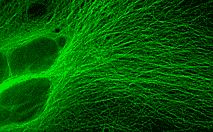
Photobleaching of fluorescent proteins in response to prolonged exposure to exciting radiation significantly impacts their performance as in vivo labels. It has been shown that oxidative reddening of green fluorescent proteins is one of the main sources of GFP photobleaching (Bogdanov et al., 2009). Evrogen's new DMEMgfp-2 is a minimally depleted live cell visualization medium that excludes the components responsible for this effect (Bogdanov et al., 2012). DMEMgfp-2 is an improvement over DMEMgfp (referred to as DMEM-V in Bogdanov et al., 2009), exhibiting similar green fluorescent protein photostability without depleting as many of the compounds normally present in most common cell culture media. This modification makes DMEMgfp-2 better suitable for long-term experiments.
|
Replacing the culture medium with DMEMgfp-2 for the period of visualization results in up to a 9-fold increase of photostability of EGFP, a 3.3-fold increase of photostability of TagGFP2 and more than a 4-fold increase of photostability of activated forms of photoactivatable PA-GFP and PS-CFP2 (the effect varies for particular fusions and localizations).
Rutin (plant flavonoid glycoside also known as vitamin P) is the component that inhibits oxidative reddening and thus increases EGFP photostability in the cell culture experiments (Bogdanov et al., 2012). An increase of EGFP photostability comparable to the level observed in DMEMgfp-2 is achieved when rutin is added 30 min before imaging to standard DMEM. Addition of rutin to DMEMgfp-2 results in further enhanced EGFP photostability (approximately 1.5-fold).