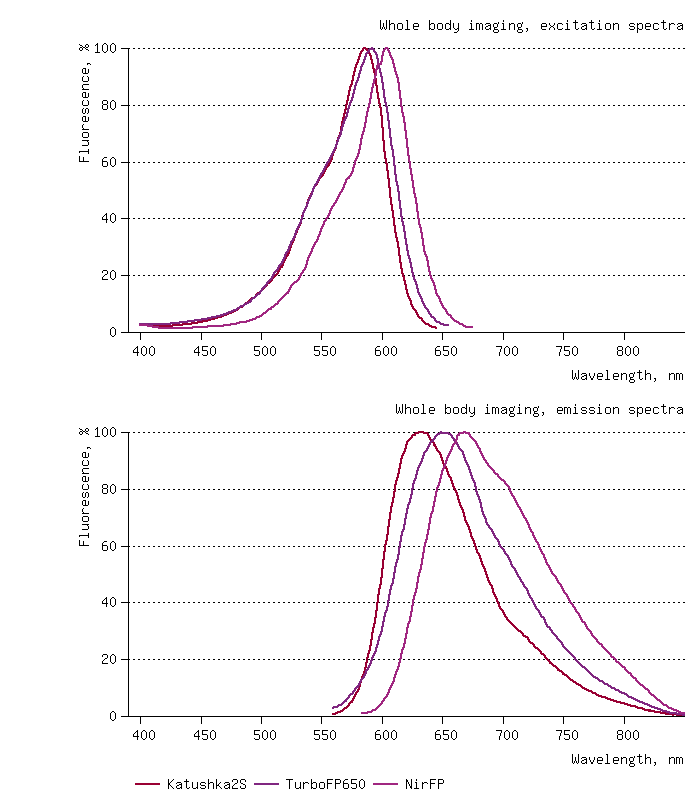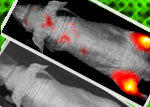
Deep-tissue imaging using fluorescent proteins allows direct and non-invasive observation of the biological processes inside living organisms. The major difficulty of fluorescent imaging within whole animals is the light absorption by melanin and hemoglobin, as well as light scattering. Both absorption and scattering become less pronounced as the light wavelength increases. The optimal "optical window", which is most transparent for the visualization in living tissues, is considered to be between 650-700 and 1100 nm. Therefore, use of far-red or near infrared fluorescent proteins drastically increases sensitivity of the whole body imaging comparing to conventional FPs.
Evrogen offers expression vectors encoding far-red and near infrared fluorescent proteins perfectly suitable for such application.