|
Red (orange) fluorescent protein TurboRFP
- Super bright red (orange) fluorescence
- Fast maturation, high pH-stability
- Recommended for gene expression analysis and cell and organelle labeling
Available variants and fusions
| Variant | Description | Related vector | Cat.# | Click for image |
|---|
|
|
Humanized TurboRFP
|
TurboRFP codon usage is optimized for high expression in mammalian cells [Haas et al., 1996], but it can be successfully expressed in many other heterological systems.
|
pTurboRFP-C
|
FP231
|
|
pTurboRFP-N
|
FP232
|
|
pTurboRFP-B
|
FP233
|
|
pTurboRFP-PRL
|
FP235
|
|
TurboRFP-mito fusion
|
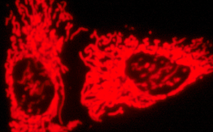
A mitochondrial targeting sequence (MTS) is fused to the TurboRFP N-terminus. MTS was derived from the subunit VIII of human cytochrome C oxidase [Rizzuto et al., 1989; Rizzuto et al., 1995]. When expressed in mammalian cells, this variant provides red (orange) fluorescent labeling of mitochondria.
|
pTurboRFP-mito
|
FP237
|
|
References:
-
Haas J, Park EC, Seed B.
Codon usage limitation in the expression of HIV-1 envelope glycoprotein.
Curr Biol. 1996; 6 (3):315-24. / pmid: 8805248
-
Rizzuto R, Brini M, Pizzo P, Murgia M, Pozzan T.
Chimeric green fluorescent protein as a tool for visualizing subcellular organelles in living cells.
Curr Biol. 1995; 5 (6):635-42. / pmid: 7552174
-
Rizzuto R, Nakase H, Darras B, Francke U, Fabrizi GM, Mengel T, Walsh F, Kadenbach B, DiMauro S, Schon EA.
A gene specifying subunit VIII of human cytochrome c oxidase is localized to chromosome 11 and is expressed in both muscle and non-muscle tissues.
J Biol Chem. 1989; 264 (18):10595-600. / pmid: 2543673
|